
Who Pushes the Boulder? Middle Leadership and Education Reform
As we wait for announcements on changes to our national assessment system for secondary schools, there is a group of teachers already carrying an extraordinary level of responsibility, writes Dr Adele Scott.
Middle leaders in New Zealand secondary schools occupy a paradoxical professional space: They are simultaneously the beast of burden and the beacon of expertise within school structures. To describe their work as Sisyphean is to honour the relentless weight they carry; to describe it as Herculean is to acknowledge the scale of skill, resilience, and ingenuity required to carry it.
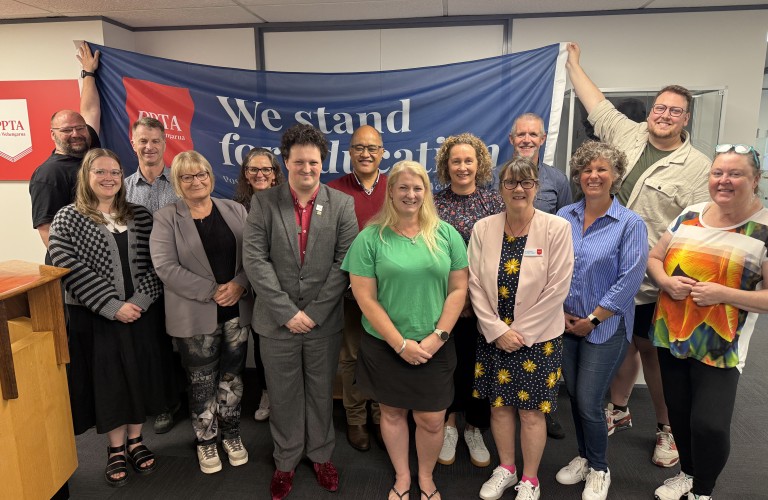
Today we had a meeting of our Middle Leadership Advisory Committee (MLAC), a group representing schools across the motu that shares effective practice and advises the Post Primary Teachers’ Association (PPTA) on issues affecting these roles. Middle leaders—whether Heads of Department, Teachers in Charge, or Deans—carry wide-ranging responsibilities.
The link to Greek mythology emerged from a recent survey, in which one respondent described the role as “Sisyphean.[1] ” Wanting to honour this metaphor, I consulted my former Head of Department, Margaret Atkinson, a scholar of the Classics, who encouraged me to also consider Hercules[2] —an apt reflection of the expertise and stamina middle leaders bring to their work; and Odysseus, son of Sisyphus and a strategic leader.
The Sisyphean image resonates powerfully because, like Sisyphus, middle leaders face an unending cycle of:
· administrative tasks that regenerate as soon as they are completed
· curriculum reforms that reset just as systems are embedded
· assessment demands that accumulate with each reporting cycle
· pastoral responsibilities that intensify in complexity year on year, and
· staffing issues—relief, recruitment, mentoring—that drain emotional reserves.
The institutional structures of the school system amplify this struggle. Middle leaders frequently have high responsibility with low power, high accountability with low resource, and high expectations with limited recognition. Their contributions are often invisible, or overshadowed by the performative demands of the system. Like Sisyphus, they push the boulder because someone must—because they care, because they are committed, because the work is morally urgent. Yet the system - and the government as authors of the system do little to lighten the load.
Middle leaders are the intellectual and pedagogical engines of secondary schools. They:
· lead curriculum design
· coach and mentor early-career teachers and the increasing number who arrive from overseas
· sustain disciplinary expertise
· hold deep relational knowledge of students and whānau
· interpret policy into practice
· manage crises with calm professionalism
· innovate within constraints
· build culture at the departmental level
Their work is not merely technical: It is profoundly symbolic, relational, and strategic. It is fundamental to the success of the huge volume of curriculum and assessment changes that this and subsequent governments are looking to make.
As each government arrives it creates its own flavour of change, usually rushed and poorly resourced and like Hercules, middle leaders perform labours that look impossible from the outside — resolving conflict, lifting departmental performance, sustaining morale, and keeping learning moving even when systems change and falter around them.
Despite their load, middle leaders are not tragic figures. They are agents of change who:
· know the rhythms of the school intimately
· see potential in students and staff others overlook
· create microcultures of care, joy, and professional excellence
· sustain the beating heart of disciplinary learning
· influence teaching practice far more than policy or senior leadership ever can
· turn setbacks into innovations, and
· keep learning alive across an entire school.
As major curriculum and assessment reforms are signalled, PPTA Te Wehengarua continues to hear a consistent message from secondary schools: middle leaders are being asked to carry change they have not meaningfully shaped and are not adequately resourced to deliver. Middle leaders sit at the critical intersection between government policy and classroom practice, translating reform into learning that works for students. Yet successive waves of change, often rushed and under‑resourced, have loaded additional responsibility onto roles that already operate with limited time, authority, and recognition.
This is not a failure of middle leadership, nor of the profession; it is the predictable result of reform that does not sufficiently engage those who must lead it. Without genuine voice for middle leaders in the design of change, and proper investment in their capacity to lead it well, reforms will continue to falter, and it will be students who ultimately bear the brunt.
Dr. Adele Scott is an Advisory Officer at PPTA Te Whengarua.
Last modified on Monday, 16 March 2026 16:20